Is Sancho’s Situation Normal for a High-Profile Free Agent?
For a player with Jadon Sancho’s profile, a quiet spell between clubs can look like a crisis. His name is familiar across Europe, his best football came at Borussia Dortmund, and his career has included major moves and intense scrutiny. That combination guarantees headlines whenever his next step is uncertain. But uncertainty is not the same as a lack of options—and the noise around a potential free-agent move often tells us less than it seems to.
The key distinction is between a player being available, a club being interested and a deal being close. Those are three different things. In Sancho’s case, reports of talks across leagues and speculation about a Dortmund return have kept the story alive, but no agreement yet is the important caveat. Until a club, the player or a reliable source confirms a concrete development, the situation should be treated as an open market rather than a completed transfer waiting to be announced.
That is a familiar position for a high-profile player approaching a major career decision. Free agency can create freedom, but it also brings a complicated set of choices: salary, role, competition, timing, and the project a club is offering. Sancho may be waiting for the right project rather than simply the first available destination. That can look like hesitation from the outside, but it is often a deliberate part of the process.
Free-agent status brings freedom—and a different kind of pressure
A free agent does not require a buying club to negotiate a transfer fee with another team. That can widen the field of potential employers, especially for a player whose quality is not in doubt. Clubs that could not justify a substantial transfer fee may be able to consider a deal if the overall financial package is manageable.
But “free” does not mean costless. A club still has to consider wages, signing-on payments, agent fees, bonuses and the length of the contract. It must also assess how the player fits its squad and whether his likely contribution justifies the investment. For a well-known name, those costs can be substantial even when no transfer fee changes hands.
There is also a sporting calculation. Sancho’s reputation is tied to the pace, creativity and one-on-one ability he showed at Dortmund, but clubs will weigh his recent form and circumstances as well as his peak. They will ask what role he can perform now, how quickly he can adapt and whether he suits their coach’s system. A free transfer can reduce one risk while leaving the central football questions untouched.
That is why being a high-profile free agent can be more complicated than being an unheralded player looking for a contract. A famous name attracts attention, but it also raises expectations. A prospective club may want the player to become a leading figure, while the player may be looking for a stable environment in which to rebuild momentum. Those aims need to match.
Rumor noise is not the same as a transfer race
When a player is available, every reported conversation can be presented as a turning point. A club is “monitoring” him; another has “made contact”; a former side is “keeping the door open.” Such language can be accurate while still describing only an early-stage conversation. In transfer reporting, interest is not an offer, an offer is not an agreement, and an agreement in principle is not a completed move.
That distinction matters particularly in Sancho’s case because his career history naturally invites a Dortmund angle. He established himself there as an elite young attacker, and a return would make for an appealing story. But the emotional logic of cesc fabregas como sancho a reunion does not prove that the club has made it a priority, that the player has chosen it or that the financial terms work.
Nor does the number of clubs mentioned in reports necessarily mean there is a bidding war. The same early conversation can be repeated across outlets, while a club’s interest may depend on other moves first. Some teams will be sounding out the player’s expectations; others may only be considering him as one option in a larger recruitment plan. Until the details are settled, “talks across leagues” is a useful description of an exploratory market—not proof that a deal is imminent.
There is a practical reason why clubs and representatives keep options open. A player’s best fit may not be the first club to make contact. A team could offer more playing time but less European exposure; another could provide a familiar coach but a less certain role. Keeping discussions active allows both sides to compare the whole package rather than deciding on the basis of a headline.
Why January can be a realistic decision point
January is often described as a rescue window, but it can also be a sensible point for a measured decision. By midseason, clubs have a clearer picture of their needs. Injuries, results and tactical changes reveal where reinforcement is necessary. A team that seemed well stocked in the summer may suddenly need a winger, while another may decide that its existing options are sufficient.
For a player assessing his next move, the winter period can offer a better view of the destination’s sporting plan. The coach has had time to establish a preferred system, and the club can explain whether Sancho would compete for a starting place, provide depth or be developed for a future role. That clarity is more valuable than joining quickly and discovering that the promised opportunity is limited.
January is not automatically the best choice, however. Midseason arrivals often have little time to adapt and may be expected to contribute immediately. A club might also have less room in its wage structure or be unwilling to disrupt a settled squad. A player who waits until the next summer window could have more options, although there is no guarantee that those options will be better.
The decision is therefore a balance between timing and fit. If Sancho wants regular football now and a club can offer a clear role, January could be a realistic moment to act. If the available proposals do not meet his sporting or financial expectations, waiting may be rational. That is not the same as standing still; it is a choice to avoid committing to a project that does not make sense.
Dortmund interest versus current squad planning
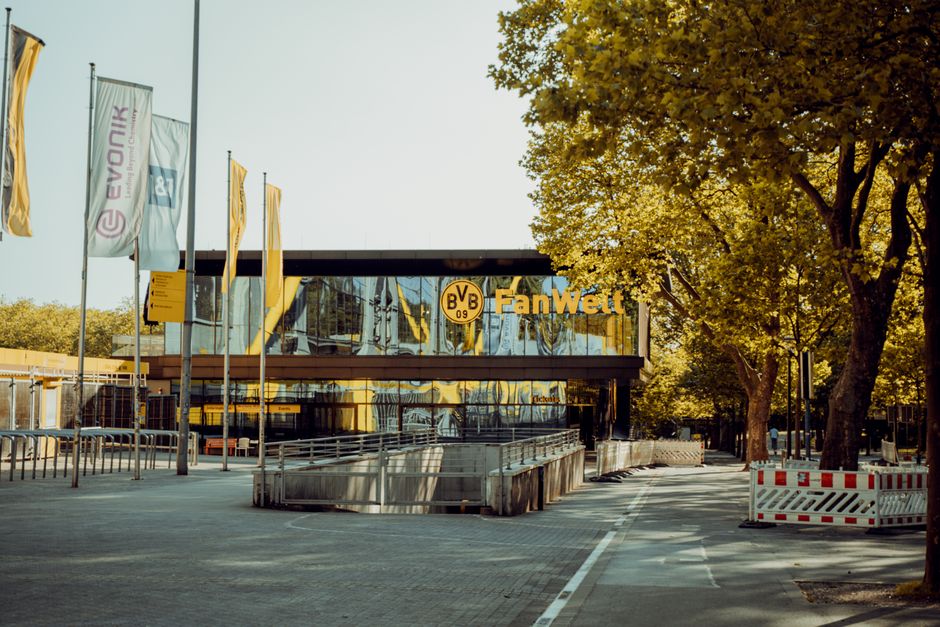
Dortmund is the most obvious reference point in any discussion of Sancho’s next move. His previous spell there was the period in which he became a major European talent, and the club knows the strengths he can bring. Familiarity can reduce some of the uncertainty around adaptation: the player understands the environment, and the club knows how he performed in its colours.
That history, though, should not be mistaken for a guarantee of a return. Dortmund’s current squad planning has to be considered independently of nostalgia. The club must assess its existing wide players, its tactical priorities, its budget and any other recruitment needs. Even a player with a strong connection to the club may not be the right fit if the squad is already balanced in his position or if another role has become more urgent.
There is also the question of what Dortmund would be asking Sancho to do. A reunion might be attractive if the club sees him as a genuine contributor with a defined role. It would be less convincing if the move were driven mainly by sentiment or brand value. The best version of this story is not simply “Sancho returns”; it is “Dortmund has a clear plan for how Sancho improves the team.”
For the player, a familiar club can offer an appealing route back to a trusted environment. But he would still need to compete for minutes and meet the demands of a team with its own ambitions. For Dortmund, his availability could make a conversation possible, yet availability alone does not resolve the financial or sporting questions. The reported interest should therefore be understood as a possibility to assess, not confirmation of an agreement.
A global market means more than Europe
Sancho’s profile gives him reach beyond one league. European clubs are the most obvious sporting destinations because they can offer high-level competition and a direct route back into the continent’s biggest tournaments. Yet a global market can include very different proposals, each with its own advantages and trade-offs.
Market Potential appeal Questions to resolve Europe High-level competition, familiar football environments and possible European qualification. How clear is the role, and can the club meet the player’s financial expectations? Saudi Arabia and the wider Middle East Significant financial capacity and growing ambition to attract established international players. Does the sporting project suit the player’s career priorities and preferred level of competition? MLS A distinct lifestyle and sporting opportunity, with growing visibility and an established international market. Would the timing, competition format and move fit the player’s immediate ambitions?The table describes possibilities, not confirmed approaches. A club or league being mentioned in transfer coverage does not establish that a formal offer exists. The most responsible reading is that a player of Sancho’s name and experience could attract interest in more than one region, while the substance of that interest remains a separate question.
For Sancho, the right destination will depend on what he values most at this stage. A return to a familiar European setting might prioritize sporting continuity. A move elsewhere could offer a different combination of financial security, responsibility and lifestyle. None of those options is inherently right or wrong; the point is that they are not interchangeable. A player choosing a long-term project is weighing more than the league’s profile.
What “waiting for a project” really means
The phrase waiting for a project can sound like polished language for waiting for the highest bid. Sometimes money is a major factor in any contract discussion, but the phrase can also describe a legitimate search for a club with a coherent plan. A player wants to know how the coach intends to use him, what the competition for his position looks like and whether the club’s ambitions match its resources.

For an attacker, role is especially important. Sancho is at his most dangerous when he can receive the ball in useful areas, combine with teammates and attack defenders. A club may appreciate those qualities but still use a system that leaves its wide players isolated or asks them to perform different duties. The right badge cannot compensate for a poor tactical fit.
Consistency matters too. A project should include more than a persuasive conversation with a coach. It should make sense across the contract, the squad and the club’s recruitment strategy. If a team is rebuilding, the player needs to understand his place in that process. If it is competing immediately, he needs to know whether he is expected to start or provide depth.
That is why patience may be sensible, within limits. Waiting indefinitely carries its own risks: fewer available places, lost preparation time and the possibility that an ideal option never appears. The player and his representatives must weigh those costs against the danger of accepting a short-term solution that does not serve his career.
So, is Sancho’s situation normal?
Broadly, yes. A high-profile free-agent situation can involve intense speculation, genuine interest from multiple markets and no immediate agreement. The player’s name makes every development newsworthy, while the absence of a transfer fee encourages clubs to explore possibilities. But the final decision still depends on the total cost and the football fit.
What would be unusual is treating every reported conversation as evidence that a deal is close. “Talks across leagues” can mean that representatives are mapping the market. Dortmund interest can be real without the club having settled its squad plan. A January move can be plausible without being inevitable. https://casinocrowd.com/would-sancho-go-to-the-saudi-pro-league-this-year/ And no agreement yet may simply mean both sides are still deciding whether the opportunity is right.
The clearest assessment is that Sancho’s next step should be judged by the quality of the project, not the volume of the rumors. If a club offers a defined role, a credible sporting plan and terms that work for everyone, a move could come together quickly. If those pieces do not align, waiting for a better fit is understandable.
Until there is confirmation, the story remains open. Sancho is a recognizable player with a range of potential destinations, but a high-profile name does not eliminate the hard choices behind a transfer. Free agency creates options; it does not guarantee an instant answer. In that sense, the uncertainty is not unusual at all—it is the negotiation process playing out in public.